












What we treat
menu-close
WHAT WE TREAT
Weight loss
icon
Testosterone
icon
Hair Loss
icon
Preventive Health
Do health
Do health
Lifestyle programme powered by your biology and blood results
icon
VOY
Meet the experts
icon
Guides
icon
ACCOUNT
Log in
icon
OVERVIEW
Weight loss overview
icon
TREATMENTS
Explore all options
Explore all options
icon
Mounjaro
Mounjaro
Lose up to 23% body weight
icon
Wegovy
Wegovy
Lose up to 21% body weight
icon
Saxenda
Saxenda
Lose up to 10% body weight
icon
Orlos
Orlos
Lose up to 8% body weight
icon
ABOUT
How it works
How it works
icon
App
App
icon
Results
icon
Experts
icon
RESOURCES
Guides & tips
icon
ACCOUNT
Log in
icon
GET IN TOUCH
020 3912 9885
Mon-Fri 9:00-17:30
icon
OVERVIEW
Testosterone overview
icon
ABOUT TRT
How it works & Pricing
icon
Medical Team
icon
CHECK YOUR TESTOSTERONE LEVELS
At-Home Testosterone Blood Test
icon
Enhanced Testosterone Blood Test
icon
REVIEWS
What people say (4.7/5 Trustpilot)
icon
EVERYTHING YOU NEED TO KNOW
Symptoms of low testosterone
icon
What is TRT?
What is TRT?
icon
Benefits of TRT
Benefits of TRT
icon
Normal male testosterone levels
icon
View all articles
icon
ACCOUNT
Log in
icon
SUPPORT
Help Centre
icon
OVERVIEW
Hair Loss overview
icon
Treatments
Complete Hair Loss Plan
icon
Finasteride Plan
icon
Minoxidil Plan
icon
Hair Vitamins
icon
Power Shampoo
icon
EVERYTHING YOU NEED TO KNOW
Topical Dutasteride for hair loss
icon
Finasteride vs Minoxidil
icon
Dutasteride vs Finasteride
icon
Minoxidil - Does it work?
icon
View all articles
icon
ACCOUNT
Log in
icon
SUPPORT
Help Centre
icon
menu-close
WHAT WE TREAT
Weight loss
icon
Testosterone
icon
Hair Loss
icon
Preventive Health
Do health
Do health
Lifestyle programme powered by your biology and blood results
icon
VOY
Meet the experts
icon
Guides
icon
ACCOUNT
Log in
icon
OVERVIEW
Weight loss overview
icon
TREATMENTS
Explore all options
Explore all options
icon
Mounjaro
Mounjaro
Lose up to 23% body weight
icon
Wegovy
Wegovy
Lose up to 21% body weight
icon
Saxenda
Saxenda
Lose up to 10% body weight
icon
Orlos
Orlos
Lose up to 8% body weight
icon
ABOUT
How it works
How it works
icon
App
App
icon
Results
icon
Experts
icon
RESOURCES
Guides & tips
icon
ACCOUNT
Log in
icon
GET IN TOUCH
020 3912 9885
Mon-Fri 9:00-17:30
icon
OVERVIEW
Testosterone overview
icon
ABOUT TRT
How it works & Pricing
icon
Medical Team
icon
CHECK YOUR TESTOSTERONE LEVELS
At-Home Testosterone Blood Test
icon
Enhanced Testosterone Blood Test
icon
REVIEWS
What people say (4.7/5 Trustpilot)
icon
EVERYTHING YOU NEED TO KNOW
Symptoms of low testosterone
icon
What is TRT?
What is TRT?
icon
Benefits of TRT
Benefits of TRT
icon
Normal male testosterone levels
icon
View all articles
icon
ACCOUNT
Log in
icon
SUPPORT
Help Centre
icon
OVERVIEW
Hair Loss overview
icon
Treatments
Complete Hair Loss Plan
icon
Finasteride Plan
icon
Minoxidil Plan
icon
Hair Vitamins
icon
Power Shampoo
icon
EVERYTHING YOU NEED TO KNOW
Topical Dutasteride for hair loss
icon
Finasteride vs Minoxidil
icon
Dutasteride vs Finasteride
icon
Minoxidil - Does it work?
icon
View all articles
icon
ACCOUNT
Log in
icon
SUPPORT
Help Centre
icon
Home/Guides & Tips/Testosterone/

High testosterone

TRT

High testosterone in men: Signs, causes and how to lower it

Here’s what high testosterone might look like, why it happens, and what to do if you’re concerned about it.

clinician image

Medically reviewed by Medical Director

Dr. Jeff Foster - Men’s Health & TRT Specialist

iconUpdated 23 January 2026

What do you think of when you hear “high testosterone?” Macho men? Aggressive behaviour? An extra strong sex drive or above-par athleticism?

Well, naturally-occurring testosterone excess is actually pretty rare in men. So it’s unlikely to be the cause behind any of those things. But testosterone is an important hormone, playing a key role in your body’s systems and functions—and if the balance is off, it’s something to address.

Key Takeaways

  • High testosterone in men is rare, and the level considered high depends on your age and the lab’s reference range.
  • High testosterone in men is hard to spot, but signs may include acne, hair loss, increased sex drive, weight gain, high blood pressure or fertility issues.
  • Most cases are caused by steroid or hormone therapy rather than an underlying medical condition. But possible medical causes include tumours or genetic conditions.
  • Too much testosterone can raise the risk of blood clots, strokes and heart attacks. It can also impact fertility.
  • If you are on testosterone replacement therapy (TRT), you will have regular check-ins and monitoring with your doctor to ensure your levels stay within a safe range.

What counts as a high testosterone level in men?

High testosterone—also known as hypergonadism or hyperandrogenism—is when your testicles overproduce the hormone testosterone.

Since high testosterone in men is rare, diagnostic ranges aren’t very well defined. A general normal range for a man aged 18 to 39 years old is around 9.15 to 31.8 nmol/L (264 to 916 ng/dL) (that’s nanograms of the hormone per deciliter of your blood).

But “normal ranges” for testosterone levels also vary based on the type of blood test done and the lab where it’s done. In men, testosterone levels naturally decrease slightly with age, too, so the testosterone level considered high also decreases.

Signs of high testosterone in adult men

High testosterone is easier to spot in boys, as it can lead to early puberty. In adult men, it’s more difficult to identify. But signs of high testosterone can span several aspects of your health and body.
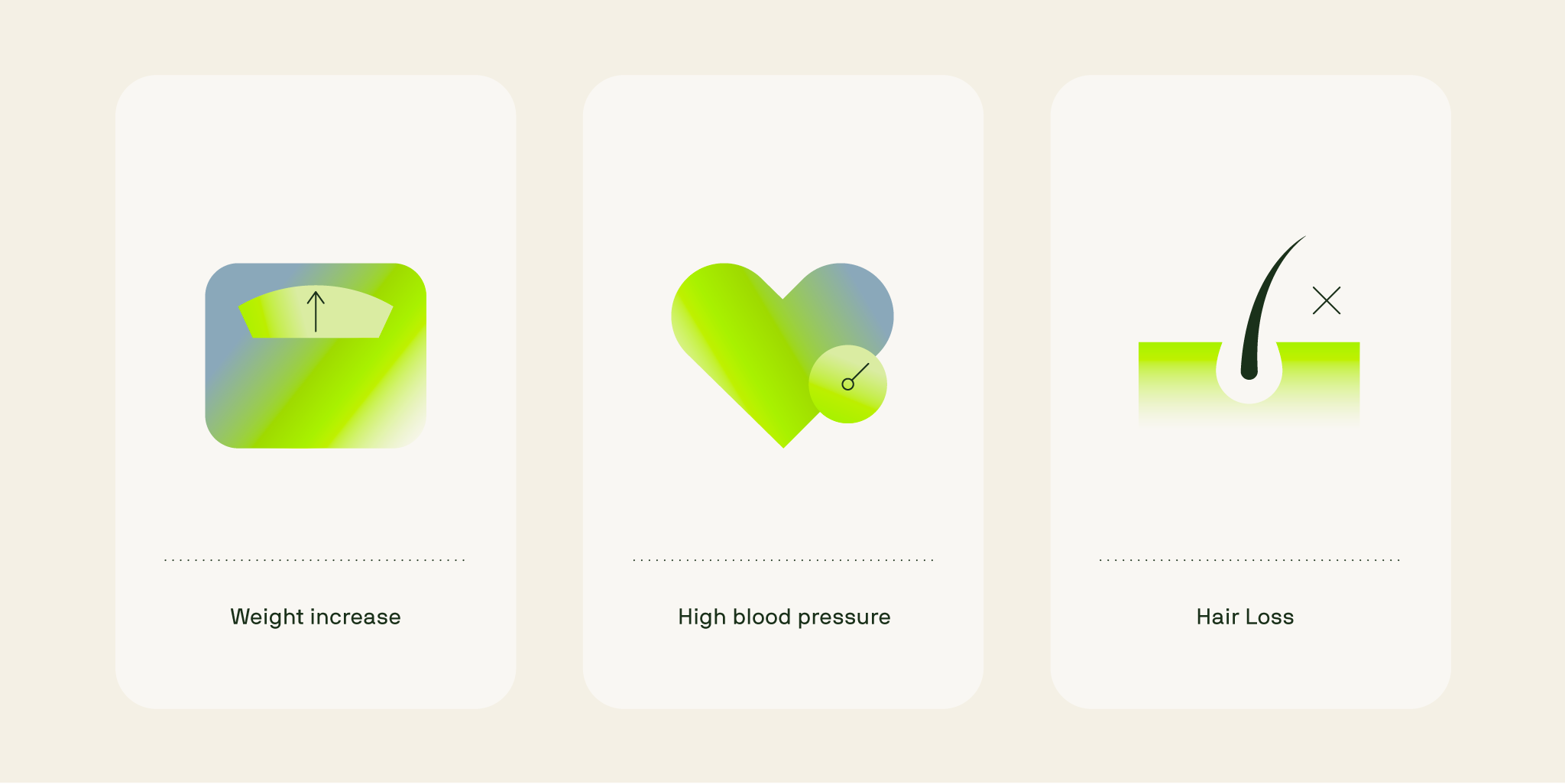
Common signs linked to high testosterone levels, such as weight increase, high blood pressure, and hair loss.

Sexual and reproductive

  • Increased sex drive
  • Fertility problems

Skin, hair and body

  • Acne
  • Early baldness
  • Excessive body hair
  • Unexplained weight gain
  • Changes in body odour

Heart and blood-related

  • High blood pressure
  • Fluid retention and swelling in your legs and feet

Sleep and mood

  • Insomnia
  • Mood swings

It’s important to bear in mind, though, that all of these issues can have many causes that aren’t excess testosterone. That’s why it’s a good idea to reach out to a healthcare provider, who can give you a blood test.

If you have high testosterone for medical reasons (more on what those could be below), it usually comes with changes in other hormone levels. So that can be a tell-tale sign for your doctor. For example, if someone has a tumour that leads to extra testosterone, it often causes the brain’s hormone signals to drop. This tells doctors that something unusual is going on and needs more testing.

Men often associate aggression with having high, or excessive, testosterone levels. But if testosterone was to be a factor in temperament, it would be really subtle. It’s more likely that stress, and the ways men are socialised, are the culprits of aggression.

If you think you may be noticing signs of high testosterone, talk to your healthcare provider. They can do some testosterone levels tests or send you to a specialist.

Feeling drained and unfocused?
It might be low testosterone. Get answers fast with an at-home blood test.

What causes high testosterone?

Causes of high testosterone in males come down to several factors, including:

  • Tumors in the testicles that make too much testosterone (for example, Leydig cell tumors in the testes, which can be harmless or cancerous).
  • Problems with the adrenal glands, like tumours or a genetic condition called congenital adrenal hyperplasia (CAH), where the body makes too much of certain hormones.
  • Early puberty, caused by the brain sending signals to start hormone production too soon.
  • Taking testosterone from outside the body (like steroids or hormone therapy).

It’s worth reiterating that high testosterone from natural or medical causes is rare. Most of what we see of abnormally high testosterone levels comes down to steroid or hormone use. If you’re wondering whether testosterone is a steroid, our guide explains the difference between prescribed TRT and anabolic steroid misuse.

And for the record, lifestyle factors— like sleep, diet, or stress—are not linked to excess testosterone.

Side effects of high testosterone

You might wonder what happens to a man when his testosterone is too high.

High testosterone levels can cause the body to make more red blood cells. This makes the blood thicker and stickier, which can raise blood pressure, meaning side effects of high testosterone can include:

  • Blood clots
  • Strokes
  • Heart attacks

When high testosterone levels cause the brain’s hormone signals (FSH and LH) to drop, it can also lead to lower fertility and make it harder to have children.

But to put the aggression myth to bed once more—research has shown that even when men with normal levels of natural testosterone were given very high doses of testosterone, it didn’t make them more aggressive or angry.

If you’re on a TRT plan, you’ll have regular monitoring and check-ins with your clinician to ensure your testosterone levels are continuously kept in a healthy range.

How to safely treat and reduce high testosterone in men

The first step in lowering high testosterone in men is to stop using anything that could be increasing it. This includes anabolic steroids (AAS), certain peptides, and supplements that might be contaminated with steroids.

Doctors then check how the brain and hormone system (the pituitary gland) are working.

  • If the hormones FSH and LH levels are low, it could mean something in the body—like a tumour—is making extra testosterone, so a full-body CT scan may be needed.
  • If FSH and LH levels are high, it means the brain is sending the wrong signals, and you may need to see a hormone specialist (AKA an endocrinologist) for further tests.

If the cause of the high testosterone is organic (i.e., not brought on by steroids or hormone therapy), then you’ll need to be treated for the underlying condition in order to bring your testosterone levels down.

A stronger, sharper you
Get your energy, drive and strength back, with a tailored testosterone service plan built by leading TRT doctors.
Effective personalised medication
Access to expert clinical team
Regular health monitoring
All-inclusive subscription - no extra costs
FAQ

FAQs about high testosterone in men

Continue reading

  • Low testosterone symptoms in men
  • Male menopause (andropause)
  • Benefits of testosterone replacement therapy
  • Testosterone gel for men
  • Nebido injection
  • Enclomiphene citrate
  • How and where to inject testosterone
  • Subcutaneous testosterone injections
  • TRT side effects
  • Is TRT safe?
  • Once you start testosterone therapy, can you stop?
  • Oestradiol levels in men
  • Foods that increase testosterone
  • How to increase testosterone
  • Does ashwagandha increase testosterone?
  • Does nicotine increase testosterone?
  • TRT cost in the UK
  • How to get TRT in the UK
  • Men’s health stigma around low testosterone
DisclaimerAt Voy, we ensure that everything you read in our blog is medically reviewed and approved. However, the information provided is not meant to replace professional medical advice, diagnosis, or treatment. It should not be relied upon for specific medical advice.
References
icon¹

Batrinos, Menelaos L. “Testosterone and Aggressive Behavior in Man.” International Journal of Endocrinology and Metabolism, vol. 10, no. 3, 2012, pp. 563–568. https://pmc.ncbi.nlm.nih.gov/articles/PMC3693622/ .

icon²

Chernecky, Cynthia C., and Barbara J. Berger. Laboratory Tests and Diagnostic Procedures. 6th ed., Elsevier Health Sciences, 2012.

icon³

“Testosterone.” Cleveland Clinic, 2025, my.clevelandclinic.org/health/articles/24101-testosterone. Accessed 9 Oct. 2025.

icon⁴

“Testosterone Levels Test.” MedlinePlus, U.S. National Library of Medicine, medlineplus.gov. Accessed 9 Oct. 2025.

icon⁵

“Testosterone: What It Does and Doesn’t Do.” Harvard Health Publishing, 2 Oct. 2013, Harvard Health. Accessed 9 Oct. 2025.

icon⁶

Rojas-Zambrano, Julio G., et al. “Impact of Testosterone on Male Health: A Systematic Review.” Cureus, vol. 17, no. 4, 2025. doi:10.7759/cureus.82917.

icon⁷

Yassin, Aksam, et al. “Testosterone and Men's Health: An In-Depth Exploration of Their Relationship.” UroPrecision, vol. 3, no. 1, Mar. 2025, pp. 36–46.

icon⁸

Zarrouf, Fawzy A., et al. “Testosterone and Cardiovascular Risk: Systematic Review and Meta-Analysis.” Journal of the American College of Cardiology, vol. 72, no. 4, 2018, pp. 535–545. doi:10.3389/fpsyg.2019.00261.

card-image
Testosterone
What is testosterone cypionate?
Here’s everything you need to know about testosterone cypionate.
card-image
Testosterone
Anadrol (oxymetholone)
Here’s everything you need to know about Anadrol and why you shouldn’t take it to treat low T.
card-image
Testosterone
What is tadalafil?
Tadalafil treats erectile dysfunction. Here’s how it works and where to get it.
Have a question?
phone icon
020 3912 9885Monday - Friday 9am - 5pm
support icon
help@joinvoy.comWe aim to reply in 24hrs
email icon
press@joinvoy.comPress & media inquiries
Our services are not intended for use in a medical emergency. If you need urgent medical attention, please call 111 or 999.

Women

  • Weight Loss
  • Menopause

Men

  • Hair Loss
  • Weight Loss
  • Testosterone

Prevention

  • Do Health

Voy

  • Meet the experts
  • Sitemap
  • Careers

Legal

  • Privacy policy
  • Terms & Conditions
  • Terms of Sale
  • Complaints

Get help

  • Help Centre (FAQ)
facebooktwitterinstagram
Copyright 2026 Voy. All rights reserved.
Pharmacies: Manual PharmacySuperintendent Pharmacist: Dawn NeilGPhC Registration: 2063362
registered pharmacycqc ratingcpd member