






 ¹
¹Bishop, Holly. “Trump Tells His Friends Taking ‘Fat Pill’ Ozempic It ‘Hasn’t Worked So Well’.” Independent TV, 23 Sept. 2025, https://www.independent.co.uk/tv/news/trump-ozempic-autism-tylenol-video-b2831758.html. The Independent
You may have come across the recent clip of US President Donald Trump referring to Ozempic as the “fat pill.” The comment has raised questions about what Ozempic actually is and whether it’s a pill or an injection.
In this article, we'll clear up the confusion: what Ozempic is licensed for, how it differs from Wegovy, whether there's a semaglutide tablet, and what's available in the UK.
Key Takeaways
- Ozempic is a weekly diabetes injection, not a weight loss pill. Wegovy (same medicine, semaglutide) is the licensed weight loss option.
- Wegovy now comes as a tablet in the US (approved December 2025), showing 16.6% average weight loss. Not available in the UK yet.
- Wegovy injections deliver 20.7% average weight loss at 72 weeks in trials.
- Access is expanding in both the US (Medicare/Medicaid pilot proposed) and UK (primary care rollout).

What Trump said
On 23 September in the Oval Office, President Trump referred to Ozempic as a “fat pill” and questioned its impact on people he knows.
“Sometimes it works on people… the ones I’ve seen it hasn’t worked so well. They say to me, ‘I’ve lost some weight,’ I say, ‘you don’t look it to me.’”
His comments quickly spread across news outlets and social media.
What Ozempic actually is
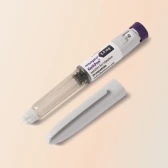
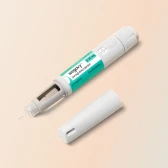
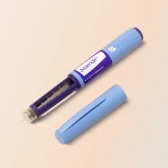
Ozempic is not a “fat pill.” It’s a once-weekly injection that contains semaglutide and is licensed for type 2 diabetes, not weight loss. In some settings it may be prescribed off-label for weight management, but that’s not its licence.
Wegovy uses the same medicine (semaglutide) but is the brand that is licensed for weight management. It is also approved to reduce the risk of major cardiac events such as heart attack, or stroke in adults with known heart disease and with either obesity or overweight.
For a fuller comparison see Wegovy vs Ozempic: the complete guide.
Discover Wegovy
Struggling to reach your target weight? You’re not alone. Find out about how medications like Wegovy can boost your efforts and get you closer to your health goals.
Science backed treatment
Clinical support
Trusted by 100,000 UK customers
Is there a semaglutide tablet?
There are now two: Rybelsus and Wegovy tablets.
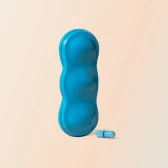
Rybelsus is the oral semaglutide tablet licensed to improve blood sugar in adults with type 2 diabetes. It is not licensed for weight loss but, like Ozempic, may sometimes be used off-label for weight management.
Wegovy was originally designed as a once-weekly injection, just like Ozempic. But in December 2025, the FDA approved it as a pill too, giving people another option. Wegovy tablets aren't available in the UK yet, but could be anytime this year.
So when people say "Ozempic pill," they're mixing up different products. If you're talking about weight loss, think Wegovy (injection-only in the UK, but available as both tablet and injection in the US). Ozempic is the diabetes injection, and Rybelsus is the diabetes tablet. If you are weighing up semaglutide against other options like tirzepatide, read Ozempic vs Mounjaro for how they compare.
Does it work for weight loss?
Short answer: yes. In clinical trials, Wegovy injections (7.2 mg weekly) achieved about 20.7% average weight loss at 72 weeks. Wegovy tablets (25 mg daily) showed 16.6% average weight loss over 64 weeks in trials.
Our research data show that patients who engaged with Voy services achieved an average 19% weight loss in just 48 weeks (11 months).
That is what the trials show. In real life, results vary. Your result depends on dose and time on treatment, plus habits like nutrition, activity, sleep and consistency, as well as your health history.
Because Ozempic (injection) and Rybelsus (tablet) contain the same active ingredient as Wegovy (semaglutide), many people also lose weight while taking them for type 2 diabetes.
Check your BMI today
Not sure where you stand? Calculate your BMI and find out what it means for you.
“You Don’t Look It To Me”: why progress might not be obvious yet
Titration takes time. You start on the lowest dose to let your body adjust and reduce side effects. Doses usually increase every 4 weeks until you reach a stable dose that works for you. Many people notice stronger appetite control between weeks 4 and 8, and it keeps building as you titrate.
Day-to-day fluctuations are normal. Water shifts, menstrual cycle, salt intake, constipation, training and sleep can all mask visual change for a few days even when fat loss is happening.
Habits still matter. Protein, fibre, balanced meals, daily movement, resistance training and good sleep make the medication work harder for you.
The usual pattern people notice
- Scale first: early changes reflect water shifts and initial fat loss.
- Clothes next: waist and hip fit loosen before others notice.
- Mirror and photos: shape and definition become clearer week by week.
- Other people last: comments come once changes add up over time.
If you’ve stepped up your dose and your appetite still feels high or your weekly trend stalls, speak to your provider. At Voy, you can connect with a prescriber via in-app chat or the hotline within minutes so we can review your dose and plan together.
Policy & access: despite the soundbite, access is widening
United States - moving toward wider access
While the “fat pill” line grabbed headlines, U.S. health policy is moving the other way, toward greater access. The White House’s Make America Healthy Again agenda flags obesity and diabetes as urgent priorities, noting that 18% of late adolescents and young adults have fatty liver disease, 30% are prediabetic, and 40%+ are overweight or obese.
The administration is considering a five-year pilot so Medicare and Medicaid can cover GLP-1 weight-loss medicines such as Wegovy, Mounjaro and Zepbound. It’s still being finalised, but the direction of travel is clear.
United Kingdom - a clear pathway that’s expanding
In the UK, weight-loss injections are already available through NHS specialist weight-management services. Access is expanding too: tirzepatide (Mounjaro) is being phased into primary care for priority groups, meaning some GP practices can now prescribe it as the rollout continues.
Why the shift?
Because the need is real, here and globally. In England, around 64.5% of adults are overweight or living with obesity, a figure that has risen steadily over the past decade. Globally, the WHO estimates more than one billion people now live with obesity; adult rates have more than doubled since 1990, and obesity has quadrupled among children and adolescents (ages 5–19). Health systems are responding with proven treatments alongside nutrition, activity and behaviour support.
Bottom line: whatever the soundbite, both the U.S. and the UK are building more structured access to effective weight-loss injections because the benefits are real and the burden of obesity is growing.
What this means for you
If you want weight-loss treatment in the UK, the licensed options are Wegovy and Mounjaro injections. Wegovy tablets aren't approved here yet. Ozempic injections and Rybelsus tablets are licensed for type 2 diabetes, not weight loss. Your prescriber will help decide what fits your health history.
- NHS access – Treatment is available through specialist NHS weight-management services. Some GP surgeries are now starting to offer Mounjaro for patients who meet specific criteria, but this varies by area and availability is still limited.
- Private route – If you don’t meet NHS criteria or prefer to start sooner, you may be eligible through a regulated private provider like Voy.
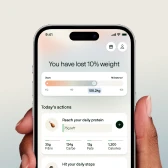
Treatment works best with behaviour support. With Voy you can reach a prescriber within minutes (in-app chat or hotline), get 1-to-1 coaching, and use our app to track injections, appetite and progress.