











- New Health Index reveals that eight out of ten (82%) Brits feel embarrassed or self-conscious about their bodies, with three in five (68%) saying it impacts their daily lives - yet two in five (39%) never speak about it.
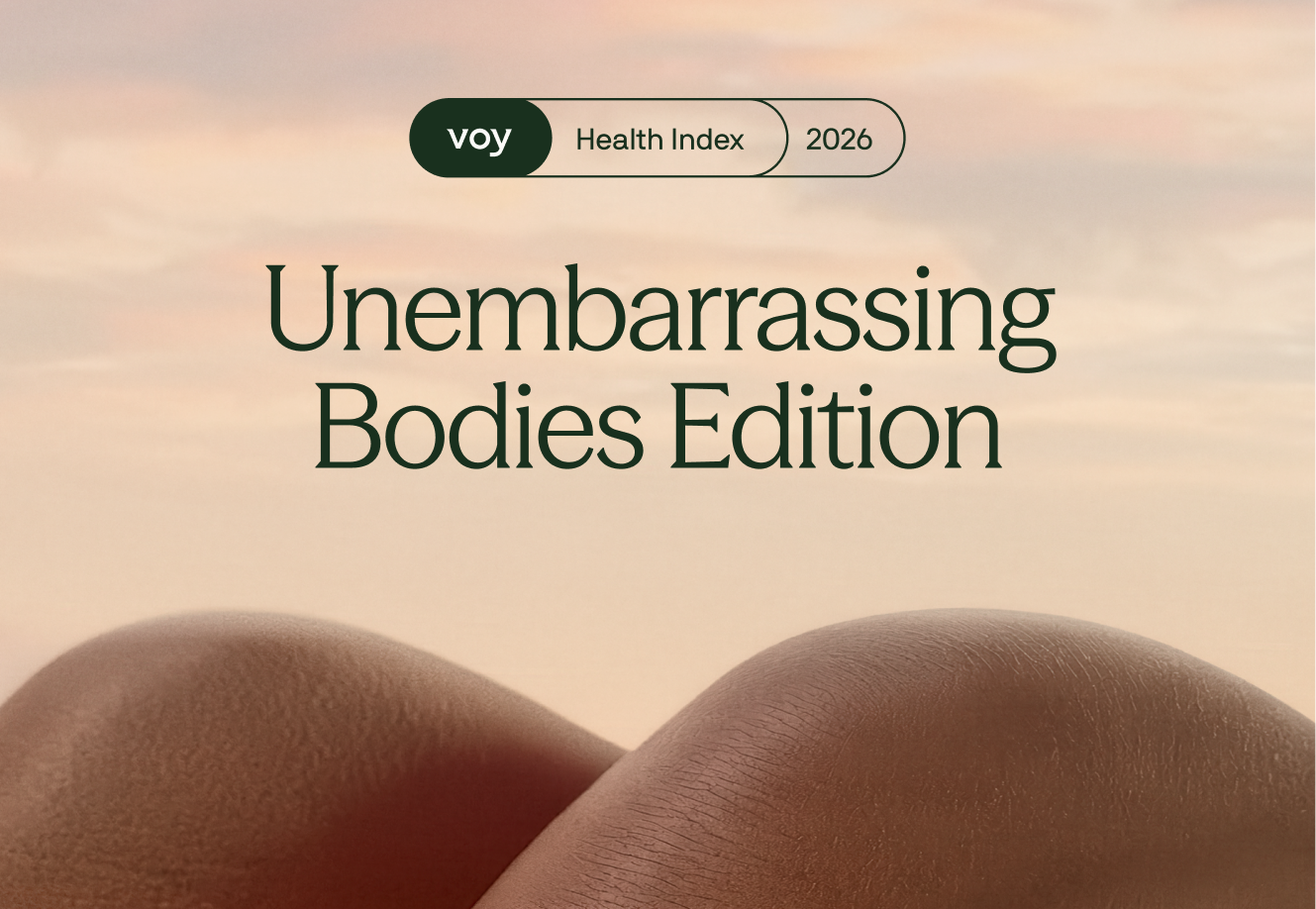
- Launched by digital health provider Voy, Unembarrassing Bodies is the first report of its kind exploring how stigma is shaping the way Brits think about and talk about their bodies - and how they live their lives.
Click here to view the Unembarrassing Bodies report
London, 26th March 2026 - Britain is facing a silent epidemic, with new research suggesting that body shame is adversely affecting how we live our lives.
Today, a nationwide study of 15,000 UK adults, conducted by digital healthcare provider Voy, found eight out of ten (82%) Brits feel embarrassed or self-conscious about their bodies.
Body embarrassment goes beyond occasional insecurity, influencing the choices people make and how they feel able to show up in the world, with 68% saying it affects their daily lives, from what they wear to how they socialise and work.
Stigma is alive and kicking in our society, and hardly anyone thinks we’ll see the back of it any time soon. When it comes to body weight for example, only (8%) of the UK would agree that stigma around it is a thing of the past.
The findings reveal body embarrassment is preventing people from living the lives they want. In fact, many people report avoiding situations that draw attention to their bodies, with over a third (35%) saying they steer clear of certain clothes and a similar proportion (33%) avoid being in photos altogether. For a quarter (25%) of respondents, concerns about their bodies also contribute to feelings of anxiety or depression, pointing to a deeper impact on overall mental health and wellbeing.
Despite the extent of these experiences, the findings reveal that body-related concerns are often kept hidden. Nearly two in five people (39%) say they have never spoken to anyone about how they feel, suggesting that a significant proportion of the UK may be managing these challenges alone.
While these experiences are common, very few people are seeking professional support. Just 9% of 18-24 year olds and only 6% of 55-64 year olds say they have spoken to a healthcare professional about body-related concerns. This points to a significant gap between what people are experiencing and the action they feel able to take.
For many, this silence suggests a sense of resignation to shame, with 26% avoiding conversations because they do not want to draw attention to their concerns and over a quarter (26%) saying they do not think talking would help.
The findings suggest that the UK has a disconnect between how widespread body-related concerns are and how rarely they are discussed. While embarrassment is common, open conversation is not, creating a cycle in which people feel unable to seek reassurance, advice or treatment, even when it may benefit their health.
Encouragingly, the research also points to a clear opportunity to combat stigma. Two in five Brits (41%) believe that better education would help people feel more comfortable discussing body-related issues. Interestingly, over a third (36%) also say that other stigmatised health topics such as menopause, testosterone and mental health should be talked about more openly in schools. This indicates that normalising these conversations could play an important role in reducing stigma and helping people feel more confident addressing concerns as they arise.
Voy’s first-ever inaugural Health Index, Unembarrassing Bodies, has highlighted the gap between how many people experience body-related concerns and how few feel able to talk about them. It also points to the role that stigma and lack of open conversation are playing in preventing people from seeking help.
Dr Earim Chaudry, Chief Medical Officer at Voy said: “The findings of our Health Index show that for many, these concerns are not just about appearance, they can shape how people live their lives, influencing the choices people make and the situations they feel comfortable being part of.
Across the UK, there is still more to be done to tackle stigma and remove the shame from conversations about our bodies. Collectively, there is still a job to be done for education - from giving people the right language to express their concerns to fostering better understanding across support networks and healthcare professionals.
Without more open conversation, people will continue to avoid seeking the answers they want and the cycle of embarrassment will continue. Breaking that cycle starts with the launch of these findings today, to open the door for conversations that will pave the way for positive change.
At Voy, we don’t believe that bodies need fixing. Our ethos is that people should feel empowered to take action, should they want to, to take control and make a positive change for their health.”
About The Research
This research was conducted by OnePoll, an independent research agency. 15,000 members of the UK public, aged 18+, were surveyed between 2nd and 23rd February 2026. The sample was nationally representative on the basis of age / gender / region.
About Voy
Voy is a clinically led digital healthcare provider. Patient safety sits at the centre of everything we do. All treatments offered through Voy are prescribed only following a thorough medical assessment by UK-registered clinicians in line with established clinical guidelines that evaluate a patient’s BMI, medical history and a detailed assessment on current lifestyle and health goals.
Treatment is never automatic and is only provided where it is clinically appropriate for the individual. Voy’s programmes are built on medical expertise, ongoing monitoring and evidence-based practice. Where treatment is prescribed, outcomes are continuously monitored to assess safety, effectiveness and patient wellbeing.
Britain: a nation deeply ashamed of its body
- 82% of UK adults feel embarrassed or self-conscious about their bodies
- 68% say embarrassment impacts their daily lives
- 35% avoid certain clothes due to body concerns
- 33% avoid photos
- 25% say body worries contribute to anxiety or depression
- 13% say it negatively affects their sex life
- 11% feel less willing to date
The UK is suffering in silence
- 2 in 5 (39%) have never spoken to anyone about body concerns
Reasons for staying silent:
- 33% prefer to deal with it privately
- 26% don’t want to draw attention to it
- 26% don’t think talking would help
Weight stigma is alive and well:
- Only 8% believe weight stigma is “a thing of the past”
- 38% feel embarrassed or self-conscious about their weight
Coping behaviours (among those self-conscious about weight):
- 90% use coping tactics
- 43% wear baggy clothing
- 40% diet on and off
- 32% avoid photos or selfies
- 25% try not to think about it
- 23% use humour or self-deprecation
People trust AI more than healthcare professionals:
- 21% (1 in 5) say it’s easier to ask AI platforms about health issues than speak to a professional
Speaking to healthcare professionals:
- 9% of 18-24 year olds have spoken to a professional about body concerns
- 6% of 55-64 year olds have done so
Women are still carrying a bigger stigma burden:
- 46% of women avoid certain clothes due to body worries
- vs 21% of men
Among those who stay silent:
- 30% of women avoid talking about concerns to avoid drawing attention
- vs 22% of men
- 27% say embarrassment or shame stops them speaking
- vs 19% of men
Men’s health taboos remain brutal:
- 17% feel comfortable discussing sexual performance concerns
- 15% feel comfortable discussing erectile dysfunction
- 13% feel comfortable discussing fertility issues
Cultural pressure:
- 51% feel pressure to “just get on with it”
- 41% say traditional masculinity creates taboos around discussing health
Menopause is still misunderstood and too private
- 30% of peri, post or menopausal women speak to a GP or healthcare professional about menopause
- 31% were unaware hair thinning can be linked to menopause
Symptoms (women 45+):
- 63% experience sleep disruption
- 61% joint or muscle pain
- 59% fatigue
Education is essential to combat stigma
- 41% say better education would help people feel more comfortable discussing body image issues
- Over a third (36%) agreed topics like menopause, testosterone, mental health and body image should be talked about more openly in schools.